
Just another WordPress.com site

Posts tagged ‘art’

Lion Lament

By Rachel H Grant

Aberdeen’s air hummed with purrs and promise. The majestic Cowdray Hall stone lion crouched on his pedestal, ready to jump but frozen like a feline future in ice. A poem in granite, the silent stone beat of his heart whispered in the wind, heard only by the seagulls above.

Scuplted as a war memorial in 1925, the wisdom of a century glistened in the lion’s still granite eyes. As the festival of street art called Nuart simmered in the summer streets, the lion stared silently on a city stitched with poetic paint. Rain ran down his face like tears, a hidden song in his eyes struggling to break free.
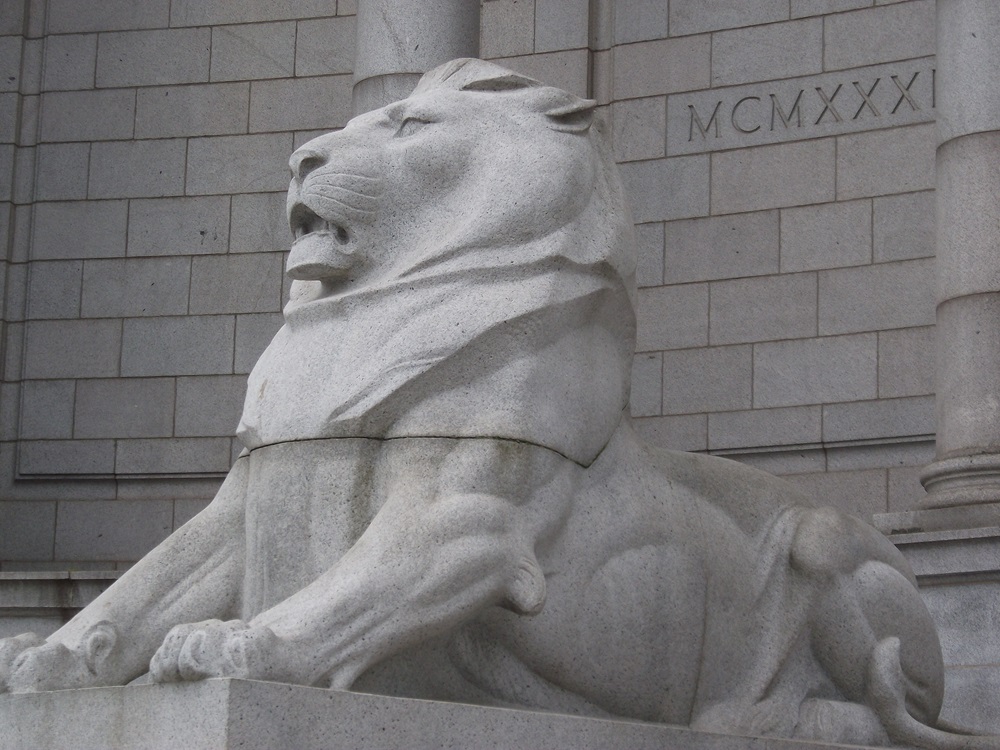
Stone lion crouching with front legs stretched out and mouth open

Night descended like a blanket from heaven, cloaking the city in mystery. The lion blinked, as impossible ignited behind his eyes. Then slowly he rose, sniffed the air and leapt effortlessly from his plinth. He walked regally along Union Terrace. Drunken revellers pointed and smartphones flashed, recording a reality in freefall.

The lion entered Union Terrace Gardens, the lighting above sparkling on his granite back. He found the leopard statue, and touched his head gently to its forehead. Silver light shot in to the sky like a shooting star in reverse.

A perfect image of the two statues kissing hit social media like a cannonball the next day, however was quickly decried as deepfake footage. The lion, back on his plinth, stared silently ahead, secrets like granite gems in his heart.

Several weeks later, the Aberdeen football club won a home match at Pittodrie Stadium. At midnight, a stone lion slowly walked round the stadium, then crouched still as frozen snow while again drunken revellers happily snapped photographs. A social media storm rained the next day, a torrent of footage and a heavy rain debate on whether or not the images were real.

The lion became a legend. After every match won by Aberdeen, he was there at midnight at the stadium. And every time a cruise ship docked at Aberdeen for the day, a lion statue would be waiting at the port, an Aberdeen hello that defied history and flirted with reason.

Known as the Secret Statue of Aberdeen, he gained his own Instagram account. Aberdeen’s tourist trade exploded like a supernova. The lion statue became one of the most famous monuments in the world.

The next summer, a Nuart festival yet again painted hues of hope across the city. The lion rested in the sun, an invisible smile behind his stone eyes. At night, he wondered the city. Art danced with adventure, as a portrait of impossible crossed the streets. The lion headed to Duthie Park. Once there, he circled the granite statue of the greek goddess Hygeia, placing his forehead on each of the recumbent lions at its foot.

Slowly and one by one the four tiny lions began to move. Together, the feline fivesome slid silently through the park, then to the River Dee beyond. Magic melted like mute meows in the air, a roar in a night that did not hear under a full moon that did not care.

However the war memorial lion cared very much, for his city … and for the future of all felines. A vision of forest teased his brain, as a wildcat called telepathically for help.

In the morning, the lion was gone. His plinth was empty.

A social media storm hit the world, with thundering shock and lightning lament. #comebacklion went viral.

The lion did not return.

However, after several days a new statue appeared at dawn in his place. A Highland wildcat.

The people of Aberdeen flocked to see the new city attraction, disbelief and delight dancing hand in hand. The wildcat cat hovered on its haunches and stared ahead with still stone eyes.

Beautiful and bewitching, this statue now became the number one tourist attraction of Aberdeen. And come the tourists did, in their thousands.

Wildcats were suddenly the feline fashion of the day. The critically endangered felines became the top celebrity charity trend, gifts to the Highland wildlife park breeding programme flowing in freefall.

Then one evening, another group of drunken revellers witnessed the stone wildcat walking confidently down Union Street. She walked through the leafy suburb of Ferryhill, and joined the lion clan in Duthie Park. Together they frolicked on the grass, free as wild felines and wise as the stone they were made of.

More and more tourists flocked to Aberdeen like birds of photo prey. International interest in the Scottish wildcat roared like a lion on the hunt. Aberdeen had birthed another wonder of the world.

Miles away under a soft moon, a stone lion stood silently at the top of a mountain, surveying the world like an ancient guardian. Seen from a corner of your eye and then gone, as his legend spread he became known as the Wildcat Warrior. Always there, near the kittens in the forest, watching over them like a feline angel in stone armour. Glimpsed from afar, then gone as soon as you grew near. A ghost of the forest, a living myth that eluded the eyes, a shadow always behind you, seen and then gone like a memory of distant childhood, feathers of fancy in the wind.

The lion roared softly, staring at the moon like at a long-lost feline friend. Whispers of wildcat wisdom purred in his stone heart. Forests spread below like a garden of the gods. The lion roared again, however there was no man to hear. Only the magic of the night, and the stars above, silent witness to a miracle.

The lion slowly walked down the mountain. The wind whispered in the trees below, wildcat secrets in the air. Somewhere a cat meowed. Above, the moon shone like a stone lion on fire. Below, a lion shimmered in the moonlight, a legend on legs, a myth in granite. He entered the forest, and disappeared. All was still, the only sound leaves blowing in the wind, stray souls seeking their home.  Enchantment faded as the moon slipped behind a cloud.

In a city many miles away, a stone wildcat shone in the moonlight. Small stone lions played below her plinth. She purred a feline poem, knowing that the wisdom of wildcats would one day heal the world. The moon continued to glow brightly, lone witness to the wonders of the invisible world below.

Far away, a lion roared again, and then a silence like the sleep of millennia cloaked the land.

Hidden Horizon

By Rachel H Grant

Inspired by a Claude Monet painting in Aberdeen Art Gallery: La Falaise à Fécamp

a painting of a cliff above the sea with blue skies above by Claude Monet
La Falaise à Fécamp by Claude Monet

The sea whispered to an unseen audience; the wind taunted the waves with its chill chuckle.

Pierre stopped, his eyes bewitched by the stark natural beauty before him. The sun-streaked sky stretched to a hidden horizon. You could imagine nothing beyond it, only this; cliffs throwing out giant arms to protect the land from the ocean, an azure sea reaching to a baby blue sky like a child searching for mother. Land and sea linked hand in hand together, a tango of trust, the muted music of waves all around. The air tasted salty and sweet at the same time. Sweat scorched his back, as the sun kissed his throbbing head.

A white horse reared on the horizon, an angel flying towards heaven. Then it galloped towards Pierre, its sun-brushed coat sparkling with white fire, a beast for a better tomorrow.

Pierre stood transfixed, a smile pirouetting on his lips. The horse slowed, finally walking gently towards him. Pierre touched the white mane, staring deep in to eyes that glowed azure green, tiny oceans within.

His own eyes fluttered then closed, hypnotised by the green poem in the horse’s eyes and the hymn of the signing sea.

Hours later he awoke, bones complaining and muscles moaning, as they always did, his poor old body failing him fast. It had been the same dream again, so real he still felt the sea breeze in his hair. However here he was, safe where he should be, in the day room of his nursing home. A breeze rattled the window, then was gone. Pierre gently closed his eyes again. However sleep eluded him. Instead, Pierre stared out the window, watching the clouds in the blue sky. If only he could drift away with them, leaving behind the decay of his life.

The TV buzzed in the background like a demented bee. Despite this, Pierre’s eyes eventually closed. He was there again, walking along the cliff as though he had never been away.

It was the cliff he had walked as a young man, life but a game to his youthful heart. The sealit landscape would haunt him his whole life. For weeks after his initial visit there, he would dream of it every night, like a book read only in his sleep, each chapter a chorus of peace in his heart.

Then the words began their daily dance, waves of emotion flooding his heart. Sonnets fell off his fingers like ocean surf as he wrote, and wrote. Pierre had not known he was a poet. Once started, the waves kept rolling in and would not stop.

Still he dreamt, night after night, of his private seascape. Sometimes the white horse appeared, at other times he enjoyed the cliffs alone.

Today, in his nursing home bedroom, he could see the poetry pamphlet he had published all those years ago on his bookshelf, neglected and unread. Would anyone ever read it again?

The book had ignited the real magic, a bonfire on a clifftop that sparked a party. For after its release he began to meet others in the dreamscape. They would stop and speak, poems in their eyes, sonnets in their still stare. When he awoke, he could recall their faces, but not their words, whisked away by the raw sea breeze.

Then one day he met her. She recited one of his poems, laughing. “Are you the poet?” she laughed. “You look like the photo on the cover of Sea Sonnets.” She was the most beautiful woman he had ever met.

When Pierre awoke that morning, an idea washed his mind like salty sea water. Were the new people in the dreamscape readers of his poetry? Had a connection through his poems linked them to his dream world?

And was the beautiful woman real?

She was there again that night. “What is your name? Where do you live?” he implored her. However, in the morning her answer had evaporated like sea mist.

Pierre lived to dream, the seascape world now more compelling than reality. Until the day he met her in the day world, the woman of his dreams. Christelle.

She stopped in the street before him, smiling. “I’ve met you in my dreams, you’re that poet, aren’t you?”

His life was transformed like a grey sea suddenly shining as the sun tore apart the winter clouds. In his dreams, he met her no more, however the horse returned, running in to the sea mist as he approached.

In his day life, the dream world claimed reality like the sea eroding a cliff. Love lanced his heart like a rock.

One night, he dreamt that he met an old man on the cliff. “Marry her, please,” begged the man. “You don’t know how much time you have. Ask her now.”

And so he did. Years of happiness followed like waves on a beach where the sun never set. Then the storm of cancer crashed through the clouds, claiming his wife, and the beach was never the same.

Pierre closed his eyes. Slowly, his head nodded forward. He embraced sleep like a lost friend. He was there, on the clifftop, silver seas below shushing the world to silence, the voice of timid time, strong as unrelenting rust and decay, with its lament to forgotten youth. The winds of tomorrow tousled Pierre’s hair, a hymn in his heart ticking like a clock, his dithering days counting inescapably down.

Ahead, a young man strolled confidently along the cliff. He rapidly approached, as Pierre realised with alarm that it was his younger self. An unbroken infinity hatched in his heart, their shared fate like a connection of lead trying to be gold.

“Marry her, please,” he begged the younger man. “You don’t know how much time you have. Ask her now.”

The young man took his hand and looked deep in to his eyes, smiled and then walked on, as the sea below sighed in time to a forgotten tune. The sea air swept old dreams away like the cobwebs of yesterday. Pierre turned, watching the young man until he faded from sight on the horizon.

The cliffs were a place to birth dreams, children of the subconscious emerging from the sea like destiny’s sylphs. Here, you could breathe the beauty of every poem ever written.

Pierre sighed. The white horse appeared ahead, shaking its sleek head. An angel of the dream world, like the sea beneath it would never die, always there, defying destiny, testing time, and winning. Pierre smiled, walking on as the door to the old world closed behind him. For the best dreams live forever, and once you find your dreamscape, you can never die.

The sea whispered to a cloud of cherubim above; the wind sighed, a song that evaded the end of eternity. The sun came out from behind a cloud. The painting hung in a gallery, and its spell was complete.