
A smile can tell a hundred words, but a frown can say more in less.
The early morning rain struck the museum windows like a wet summer snowfight. The Louvre stood resplendent in the sun, a rainbow appearing above as rain played with the light like a mischievous kitten.
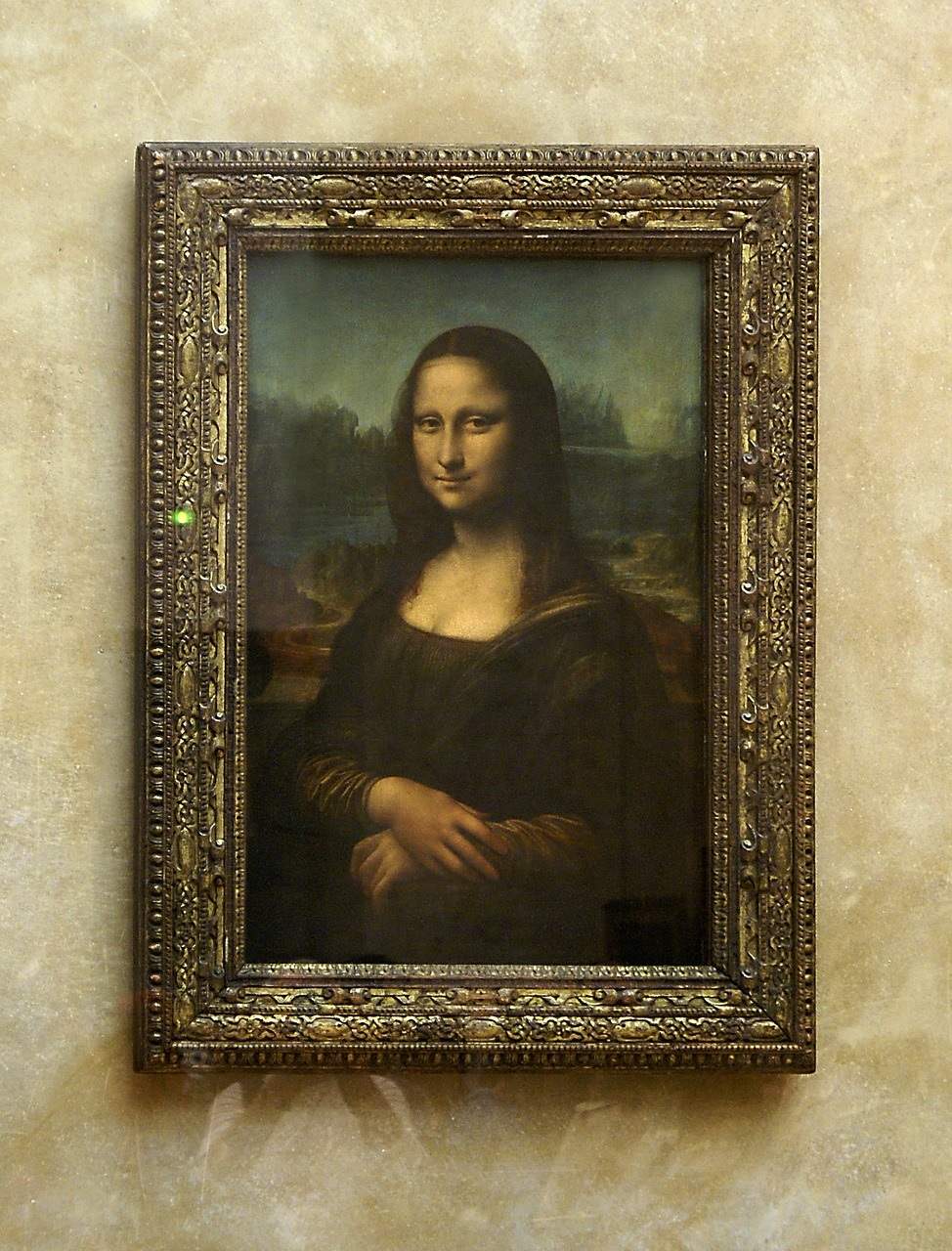
Soon, its doors would open to eager tourists: a highlight of the tour the revered painting, the Mona Lisa. A collective gasp of shock reverberated as the first tourists arrived at the famous portrait.
The Mona Lisa did not smile today, she very emphatically frowned. Her unhappy face regarded the tourists with disdain.
Within seconds, images of the altered painting appeared on social media. The frowning Mona Lisa went viral.
The Louvre management were aghast, and hastily restricted access to the painting. Experts were summoned to examine the portrait, as security footage was scanned rigorously. However, it appeared there was half an hour when all security cameras and devices went offline. The mystery deepened.
“The Disapproval of the Mona Lisa” headlines appeared around the world. Meanwhile, experts quickly established that the painting was a fake.
The real Mona Lisa had been stolen, however replaced with a very fine substitute that would have required time and talent to produce.
The mystery deepened further.
Days tumbled like dominoes, turning in to weeks then months. The investigation in to the theft was on a one way street to nowhere. The mystery had solidified in to rock.
Then the impossible happened. The Mona Lisa portrait appeared in a public place, unattended and there for anyone to steal.
A tourist spotted it early one morning at the famous most northerly bus stop in the UK, on the island of Unst in Shetland. Her excited social media posts went viral.
The bus stop was renowned for its most northerly location, furnished and decorated by residents, rendering it a tourist site. However, it was now famous for a new, bizarre and utterly mysterious reason. Why would anyone steal one of the world’s most priceless paintings, and then discard it at a bus stop – albeit an extra special bus stop?
Experts were rushed to Shetland, and all agreed that this was the real Mona Lisa painting.
However, there was more.
A mysterious sheet of paper with a message in a foreign language was attached to the back of the painting. What did it say?
The experts were confused, they did not recognise the language. However, the Unst Community Council tried to be helpful. They posted the full script in its strange characters on their website. This attracted international interest, making Unst Community Council overnight the most famous volunteer community group in the world.
Language enthusiasts the world over flocked to the community council website. It did not take long for a verdict to arise. The strange language was in fact Klingon, a fictional language belonging to an alien civilisation featured in Star Trek.
The mystery had only deepened further.
The services of a Klingon translator were hired by the Louvre Museum, for an undisclosed sum.
The note consisted of the lyrics to John Lennon’s famous song, “Imagine.”
The mystery was growing by the day. Why would anyone steal a renowned painting, to deposit it in an unrelated public place with a message in Klingon? Was someone trying to publicise the song Imagine? But why go to these very bizarre lengths to do so?
Meanwhile, Unst Community Council held an emergency meeting. It was proposed that the Mona Lisa painting could be construed as a gift to the island, and that it could usefully hang in their village hall to increase tourism. The proposal was voted on and accepted unanimously. Quickly, the painting was removed from its current secret location, and housed in a member’s garage until security arrangements for the village hall were in place.
When officials arrived to collect the famous painting, they were refused. The Louvre Museum management could not believe it. The situation escalated further when the UK ambassador to France was summoned to explain why the painting would not be returned. The UK government were forced to intervene, and quickly wrote to the Unst Community Council with strongly worded instructions to release the painting immediately.
The Director of the Louvre Museum also wrote to the Unst Community Council, with a sympathetic tone of support for their wish to benefit from the strange events that had occurred on their island. He proposed a swap: the real Mona Lisa for the fake frowning Mona Lisa, which was now arguably as famous if not more renowned that the original.
This appeared to be an agreeable solution all round.
So the frowning Mona Lisa took up residence in Unst Community Hall, and tourists from around the world came to pay their respects and to try to work out the mystery in her features. Why did she frown? Next to the painting, the Klingon script completed the mystery, with its English translation beneath. What was the message? The tourist trade in Shetland boomed like never before, and the islands became richer.
Meanwhile in Unst, the Mona Lisa continued to frown, a hidden message in her sad eyes.
The enigma was never solved. In time it became an enduring 21st century unexplained mystery.
However, the Mona Lisa in Paris still smiled, perhaps secretly laughing at the strange behaviour of humankind. Her beautiful face would continue to inspire and uplift for all time, a true gift to the world. Low music now played in her room: Imagine by John Lennon. Hand in hand, art and music would ignite a happier forever.
 Writer Unblocked
Leave a comment